I’m turning 78 today as I write this. That’s a darn big number and it almost begs attention to an issue every one of us lives inside implicitly or explicitly during each of our moments: our relationship to time.
Let me ask two questions. After I ask each one, pause to see how they land. Let your mind give shape to the question and what it might mean or be about. Just notice where your mind goes. Ready?
Question 1: How much time will it take?
Pause to consider and observe.
Now for Question 2:
How much time do you have left?
Once again pause to consider and observe.
You just tapped into a large chunk of what it means to grow old. Your perspective on time shifts. But that shift is not true just for old people. That shift happens when people develop illnesses that are life threatening. And not just that. Not now. Not in today’s world.
Today younger people are confronting realities that previous generations could and did easily postpone. Humans have been changing the world’s ecosystem in small ways ever since Homo sapiens and the hominins before them have existed. But now our impact has grown to the point that the very words “climate change” suddenly turn every thinking human into the functional equivalent of an old person. Just notice as you read this:
Climate change. How much time will it take to solve it? How much time do we have left?
Does that shift of your perspective on time pack a punch?
How about economic disparities? Time. Time left.
Mass immigration due to climate change and economic disparities? Time and time left.
Disappearing species? Disappearing cultures? Fragile parts of the natural world? Time and T-L.
The economic dominance of hyperscalers and their impact on political freedom? TnT-L.
AI and its impact on human prosperity or perhaps human life itself? TNT-L.
Like actual TNT, the mental explosion of how we all handle TNT-L in a world changing this fast in such major ways is challenging our ability to stand steady, to make plans, and to do what matters. It injects even young people with a sense of hopelessness or meaninglessness as decisions are made about school, career, marriage, and children.
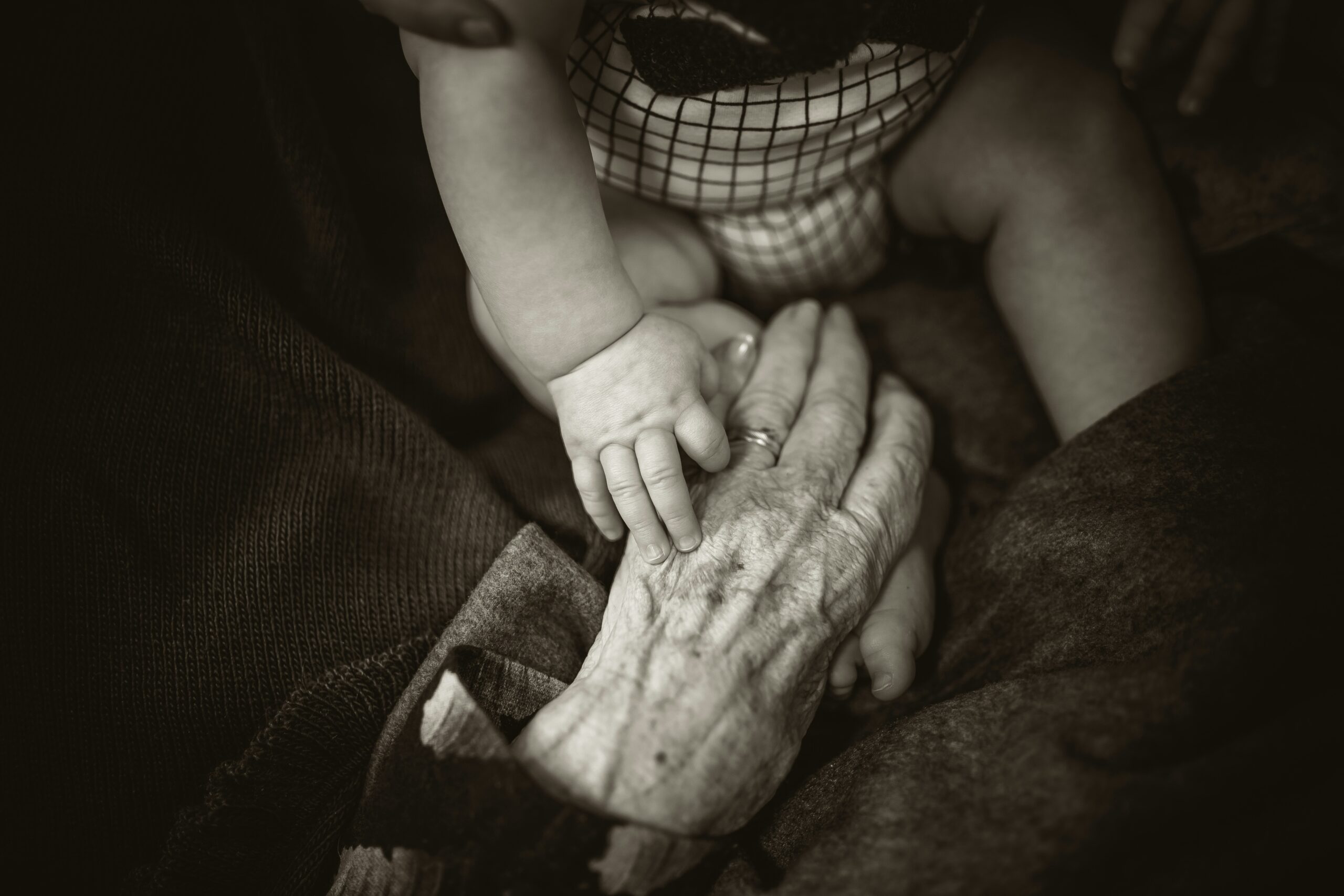
Now, we are all old.
OK, well what can we learn from the very old? They’ve always been the scouts at the edges of the distant temporal pathways our lives explore. They face time and time left almost by definition. Some are facing time and time left in relatively healthy ways, even with our weakening vessels of cultural wisdom. If you bring a functional and contextual scientific perspective to what our “scouts” learn at their best, the message is uplifting.
As people age well, they tend not to sweat the small stuff as much. They tend to be a little more open to emotions, both so-called positive ones and so-called negative ones. They become more selective about where to put time and energy. Emotionally meaningful relationships and activities tend to matter more. They find meaning and a sense of time balance. (e.g., DOI: 10.1080/13607863.2022.2036948).
No, it’s not universal – we all have or know of an Uncle Fred or Aunt Zelda who are not aging well at all. But people who have developed psychological flexibility skills do better with those challenges. And we can develop that needed kind of flexibility at any age and it can foster more effective forms of prosocial and cooperative behavior.
Of course, some of our aging “scouts” fail the myriad of challenges. Physical flexibility, strength, and endurance become harder to maintain. Capabilities and opportunities pass away. I used to be quite a good guitarist, and I enjoyed the heck out of it, and now my arthritic hands mock me. Hardly a week goes by now in which an acquaintance doesn’t die. My 60th high school reunion is happening in a week, and it is a bit shocking how many of the names of classmates on the list have that word just ½ an inch to the right of their names: Deceased.
But these involuntary challenges are often met and the skills that help us meet them can be cultivated.
Some science. Just a little bit.
Psychological flexibility means learning to be more emotionally and cognitively open; more aware of the present from a perspective-taking sense of self; and more able to build values-focused habits, including in our bodies and relationships.
Interestingly, taken as a whole, these skills do not decline as we age. Instead, a review of 46 studies on the topic found a general tendency for older adults to be more psychologically flexible than younger adults, especially in mindful awareness and, somewhat less consistently, emotional openness. These skills, in turn, are strongly related to lower anxiety and depression in older people.
The science is still developing, especially on values and committed action, so don’t mentally turn those findings into a fountain of youth. But the overall message is hopeful: some of the psychological skills we most need as our options narrow can be learned—and may even strengthen with age.
So perhaps the current question isn’t simply: How much time will it take and how much time is left? It is also how else can I put what I care about into my life, regardless of the time?
As I age those questions feel less philosophical to me than they once did. Now that we are all old, perhaps that’s a place we can focus.
There are things I still very much want to accomplish. But there are also four children I want to spend time with. There are people I love. There are places I want to see without always carrying a laptop full of unfinished obligations. There are moments I increasingly don’t want to sacrifice to something merely because I could do it.
A shorter horizon can make life feel smaller. But it can also clarify what belongs inside it.
None of us knows exactly how much time we have. But perhaps we don’t need to know.
We can let the reality that time is limited – not as a morbid thought, but as a fact of being alive – help us become more flexible about how we spend it. The finitude of life makes every moment dear. It makes every single moment a chance to choose between love and fear.