In December of 2000, the West Ham United was playing Everton in a Premier League soccer match when one of those small moments happened that still has the power to teach.
With the score tied 1 to 1 and with seconds left for West Ham to score, Everton goalkeeper Paul Gerrard charged well out of his penalty box to clear an incoming ball. He took a wrong step, his knee buckled, and he collapsed to the turf in intense pain, unable to move. The ball, still alive, bounced to a West Ham player who lofted the ball to their gifted but unpredictable forward, Paolo Di Canio.
An open goal in front of him for a sure win, Paolo caught the ball with his hands and pointed to his fallen opponent. He stopped the game, forcing a tie.
The crowd rose to applaud him and FIFA gave him its Fair Play Award. But I doubt that the award is why this story is still being written about a quarter of a century later. It has lasted because in that instant, everyone could see a deeper agreement that sits unnoticed beneath the games we play.
Yes, we are here to compete. Yes, we want to win.
But not like that.
That is the thing about sport at its best. It is metaphor for war – but it’s not war. It seeks domination, but it’s not domination. It is not hatred wearing a scarf. Sport is an agreement to struggle beautifully toward an end that lives inside shared rules and cooperation.
The World Cup is the perfect time to notice how freakin’ human that is.
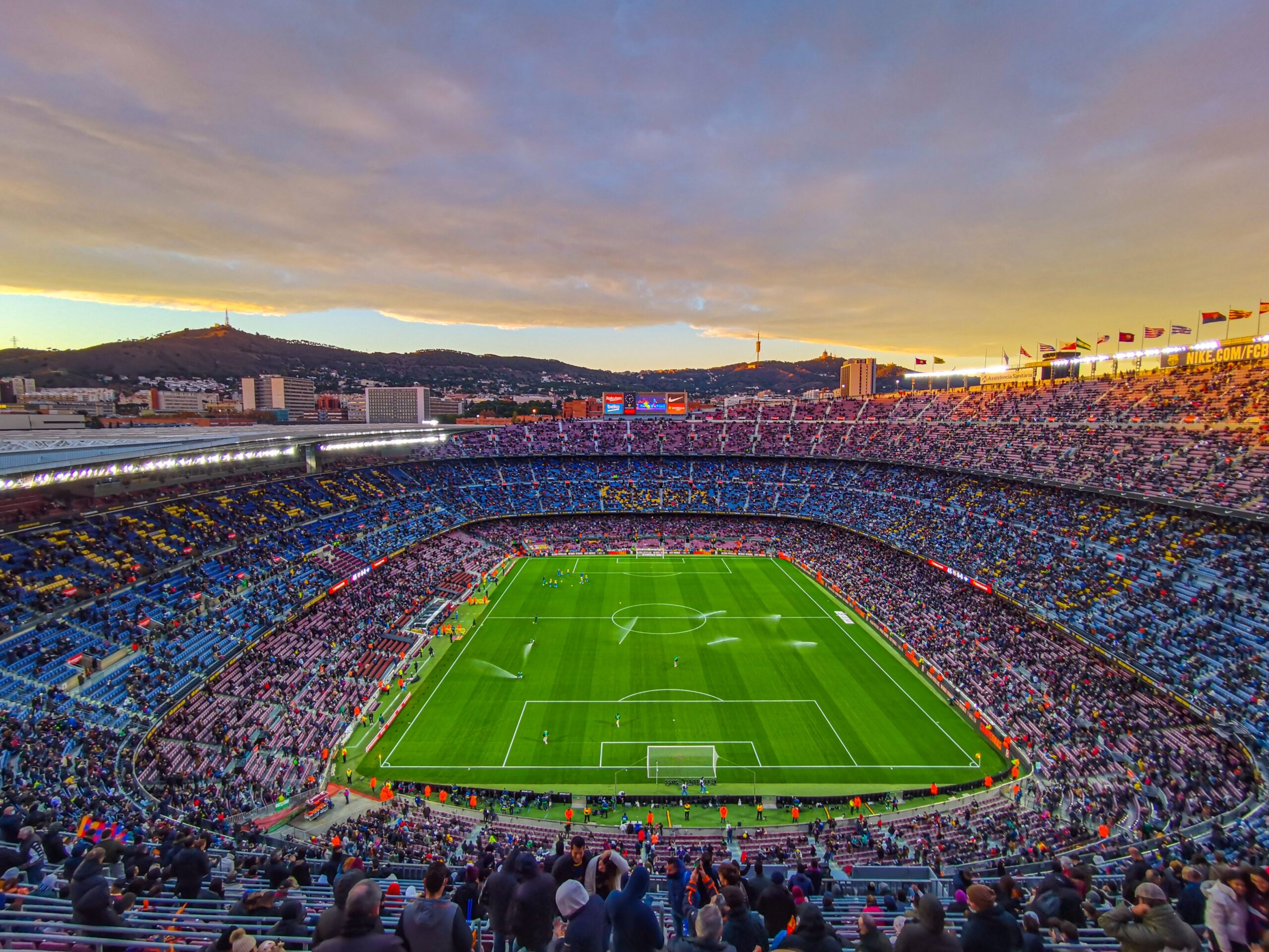
The whole planet is now leaning toward a soccer ball. My wife and son call out from the couch with every near goal even though you can hardly call them soccer fans. Hearts pound. Nations sing. A penalty shot hits the post, and millions of bodies jerk at once across the globe.
I have spent much of my scientific life arguing that values are more important than goals. I still believe that. A goal is something you can achieve, check off, win, lose, reach, or fail to reach. A value is a quality of action. It is how you want to be while you are doing what you are doing.
But there is an important wrinkle here, especially in play, sport, fun, and recreation.
Often a goal gives values a body. That idea is in an ACT aphorism: Outcome becomes the process for the process to be the outcome.
That’s not psychobabble. Read it again.
Think of a young child playing tag. She points to a tree and shouts, “I can touch that tree before you touch me!” Is the tree important? Well, yes and no. There is nothing sacred about the bark. No one is handing out a trophy. No university will examine her tree-touching record.
But the goal creates the game. It gives shape to the running, daring, dodging, squealing, and trying. That child will give every ounce of effort she has before she and the other children fall laughing into the green grass The value is not hidden behind the goal. The value is the fun of pursuing it.
That is why sport can be so beautiful as a metaphor for life itself.
A white line, a clock, a whistle, a rule about what offside means, a net stretched across a frame: these are all arbitrary. And that’s the very point! They do not matter until human beings choose to matter about them. Then a ball crossing a line can carry beauty, courage, discipline, loyalty, teamwork, grief, effort, and grace along with it. And most of all? The fun of play.
It’s not just sports. Have you ever noticed we speak of playing music or putting on a play in the theater? “Play” reminds us that in some contexts we already know how to pick an outcome and pursue it cooperative without believing the outcome is the deepest point. It is not. The game is the point. The goal and the rules merely allow it to occur.
The psychological flexibility model inside ACT gives us a way to understand both the beauty and the danger.
Psychological flexibility means learning to be more open, aware, and actively engaged in what matters. It does not mean you do not care. It does not mean you float above the game like a calm little cloud of spiritual superiority. Please. If you are a fan, be a fan. Wear the colors. Sing the song. Yell at the screen. Let your heart rate rise. Care enough that losing hurts.
The question is not whether you care. The question is how you care. Do you do it in a way that makes you larger or smaller? Does your love of your team open you to connection, joy, loyalty, humor, and shared humanity? Or does it shrink you into contempt, tribal hatred, and the need to humiliate someone else?
That is where the World Cup becomes more than entertainment. It becomes practice.
For players, psychological flexibility is visible when they carry pressure and still allow their bodies and the many thousands of hours of playing their bodies intuitively contain, to do what can be done within the rules.
A great athlete is not someone without fear, anger, doubt, or the desire to win. A great athlete is someone who can feel all of that and still make the pass to the open teammate without thinking more than a microsecond if it is within the rules and moves toward an arbitrary goal. Win or lose a player like that knows what everyone will correctly say later: “it’s just a game.”
For fans, the same principle applies – from the stands, the pub, the living room, and the group chat.
When your team scores, can you celebrate without turning the other side into garbage? When the referee misses a call, can you protest without surrendering your dignity? When your team loses, can you grieve without needing someone to hate? When the opponent plays beautifully, can you let yourself see it?
That last one is harder than it sounds.
The human mind is a loyalty machine because we are the social primates. Once we say “us,” the mind quickly builds a “them.” That is not all bad. Belonging matters. Shared identity can lift us up. A stadium full of people singing together can remind us that we were never meant to be isolated little problem-solving machines locked inside our skulls.
But belonging turns dangerous when it fuses with contempt.
You can love your side without despising the other. In fact, if you love the game, you have to love the existence of the opponent. Without them, your team has no stage on which to be brave, or courageous, or persistent!
That is what Di Canio’s gesture revealed. He was not refusing competition. He was protecting it. He saw that the contest only has meaning inside a larger human agreement. The crowd is not just a noise machine. The game is a shared world, and everyone on the field helps create it.
Even the person trying to beat you.
Cheer in a way that leaves you proud of yourself afterward. Argue in a way that does not require an apology. Celebrate in a way that makes room for the other side’s sadness. Lose in a way that keeps your heart open.
The scoreboard matters – because we matter about it. Without the tree, the child’s running has no shape.
But the tree was never the whole point.
The point was the joy of running to get there.